
| Editorial: | . Instituto de Etnología y Folklore, Comisión Nacional de la Academia de Ciencias, |
| Ciudad: | [La Habana], |
| Año: | Año de la Planificación, 1962. |
| Medidas: | 21x27. |
| Paginación: | Title page; 171pp. of text; 41 original silver gelatine print photographs laid down on heavier paper, with interspersed pages of text (pp. 172 - 192) |
.
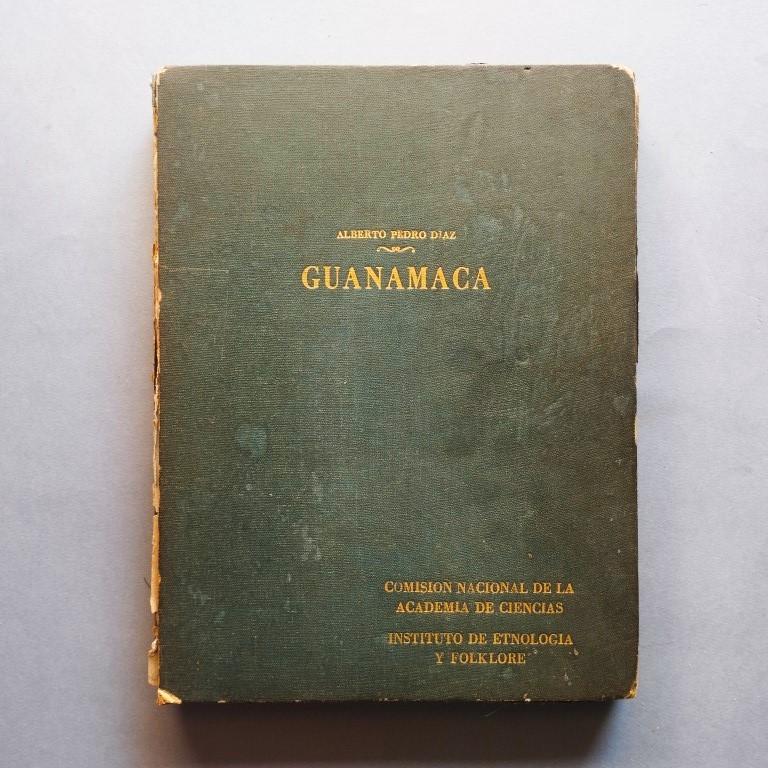
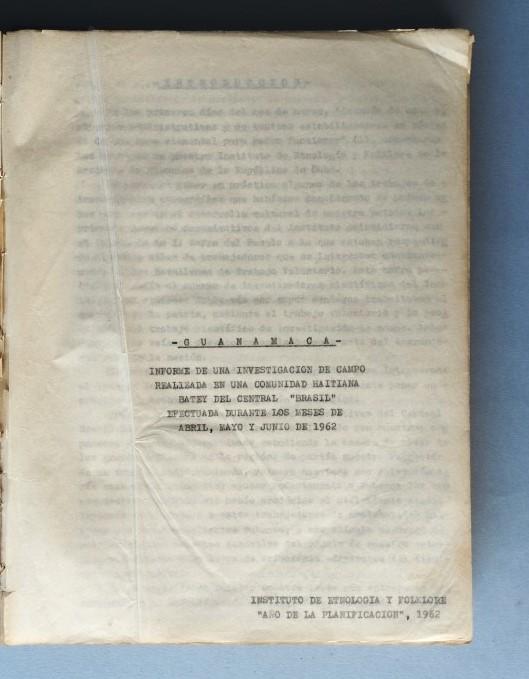
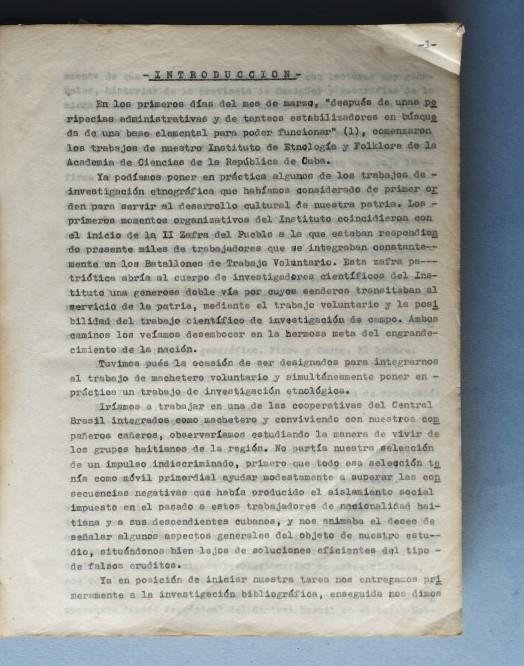
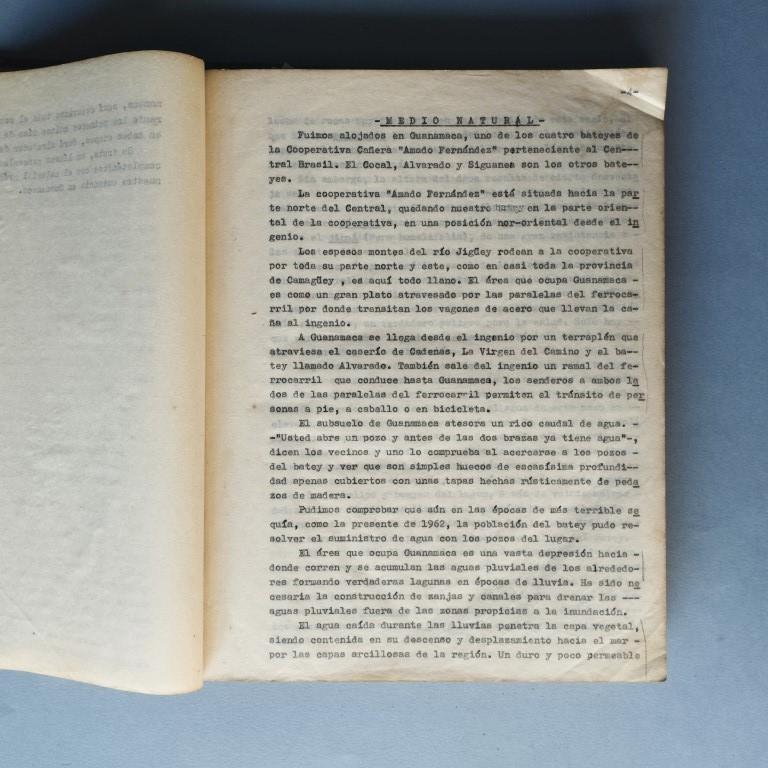
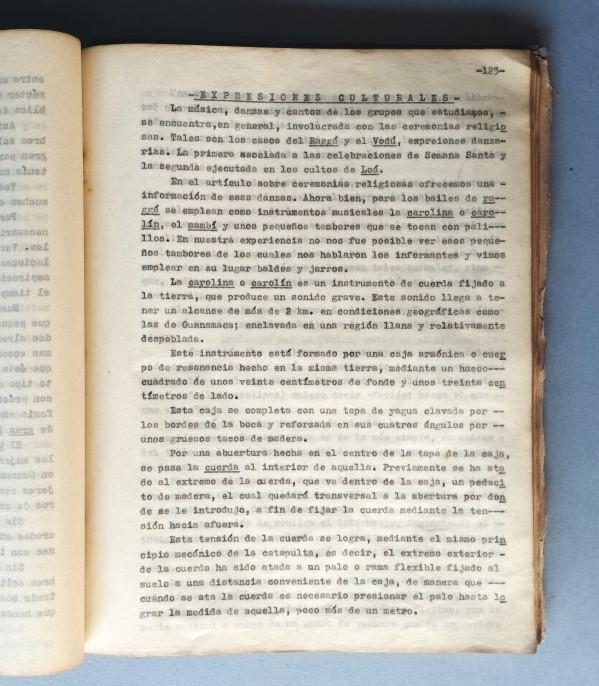
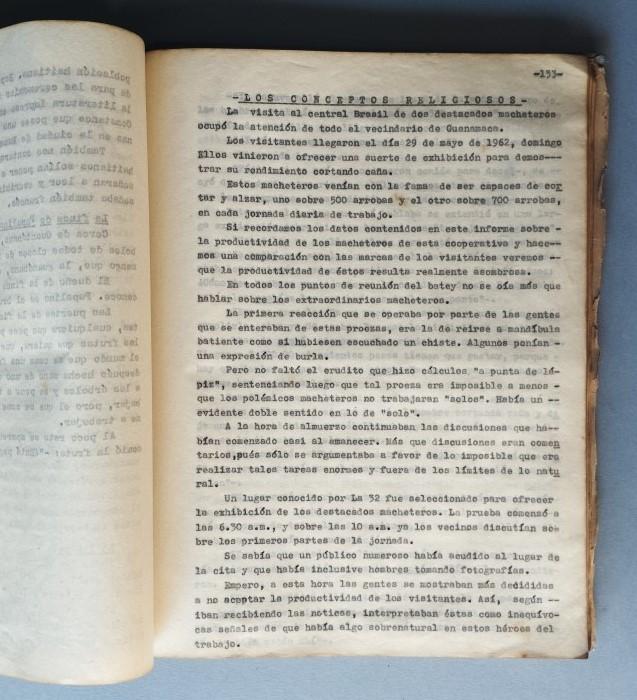
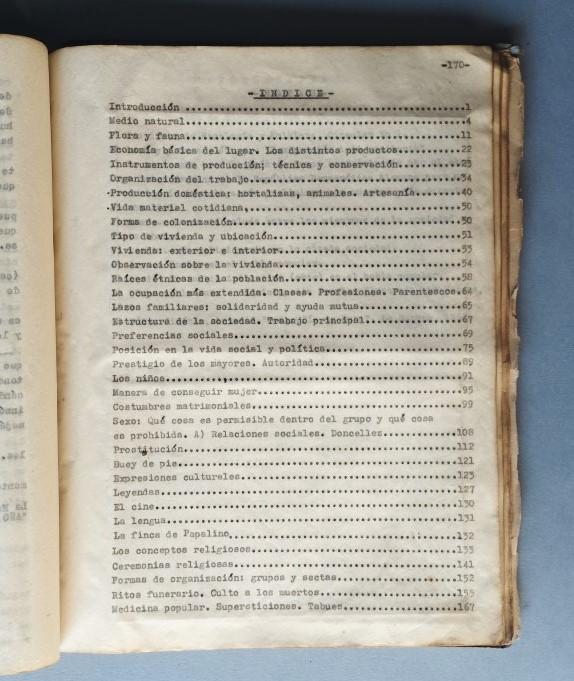
The text is a carbon copy typescript on thin bond paper. Bound in cloth, with the title and author stamped in gold on the front cover. Part of the spine is missing and the front cover and first four leaves are loose, or partly loose, back cover loose. For three months in 1962, the young ethnologist Alberto Pedro Díaz (we have been unable to discover his date of birth, but he died in 1999; to avoid confusion, we would point out that Pedro is the author's first surname) conducted an anthropological investigation into the small Haitian community of Guanamaca, in the Cuban province of Camaguey. He combined this activity with his voluntary work on the zafra, or sugar harvest, one of the thousands of enthusiastic young supporters of the Cuban Revolution who left the cities to share in the arduous labours of sugar cane cutting and help in the literacy campaigns the peasant communities of the Cuban countryside. Large numbers of Haitians had emigrated to Cuba in the 1910s and 20s when the Cuban sugar trade was flourishing; they generally lived in tight communities, speaking French or Creole, and maintaining their own traditions, language and religious practices. This is the subject of Pedro Díaz's study; he formed part of the Seminario de Folklore of the Teatro Nacional de Cuba, studying under the ethnologist and musicologist Argeliers León. In 1961 he published a study on the Abakua Sect (‘Para iniciarse en la sociedad abakuá’) in Actas de Folklore Nº 4. In 1974 Pedro Diaz’s name appears in the final credits of the film De Cierta Manera, directed by Sara Gómez, as a consultant (‘asesor’). This is really all the information that we have been able to assemble on the ethnographer and expert on Afro-Cuban studies, and Cuban-Haitian communities. Today’s Cuba has become a country where information sometimes simply cannot be obtained, perhaps because Cubans now have rather more pressing matters on their minds. In 1962 Alberto Pedro Díaz joined the newly formed Academia de Ciencias. This study appears to have been a thesis, possibly a doctoral thesis - we have found half a typed sheet with critical comments on the study, numbered 5 to 8; these were presumably written by his teacher, supervisor or the examiner of the thesis. The study is divided into thirty five chapters. The first part covers the geography and the natural environment of Guanamaca and the surrounding area; the middle section describes the social aspects of this Haitian community, while the final (and largest) section gives an extensive, if often anecdotal, description of the culture and religious beliefs of these Haitian Cubans. There are detailed descriptions of the music of Guanamaca, raggá, merengue and vodú, and the instruments that are used - the carolina (or caolina), the mambí and an assortment of drums. There are numerous references to Cuban santería, but these are generally points of comparison to the Loá or Voodoo (here 'vodú') beliefs of the inhabitants of the community. He
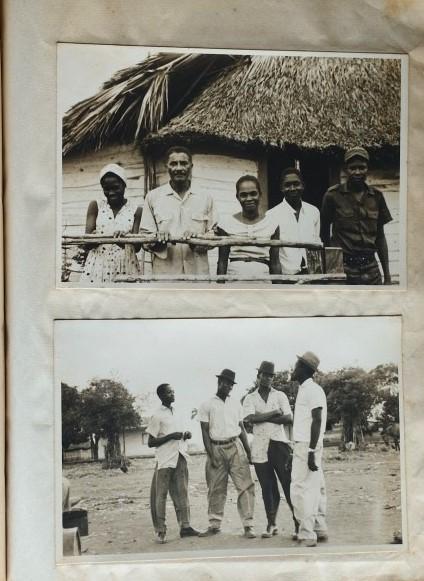
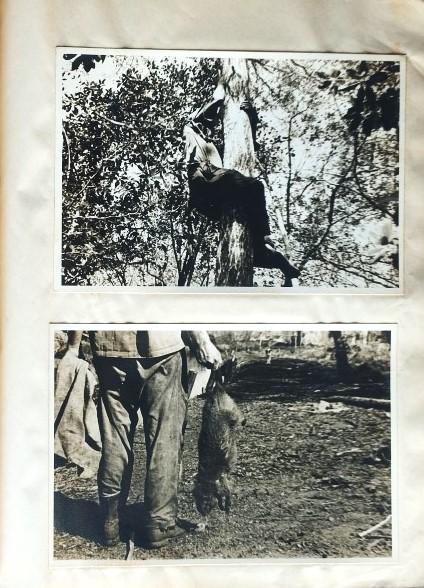
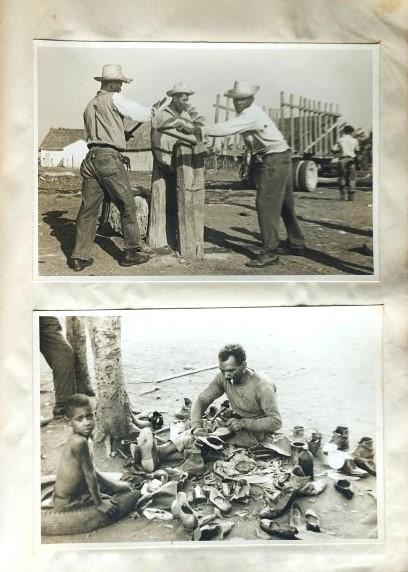
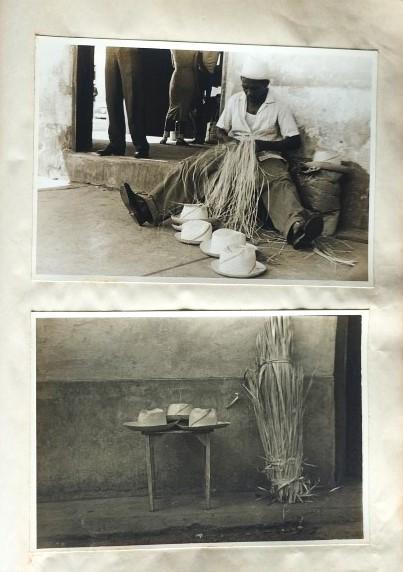
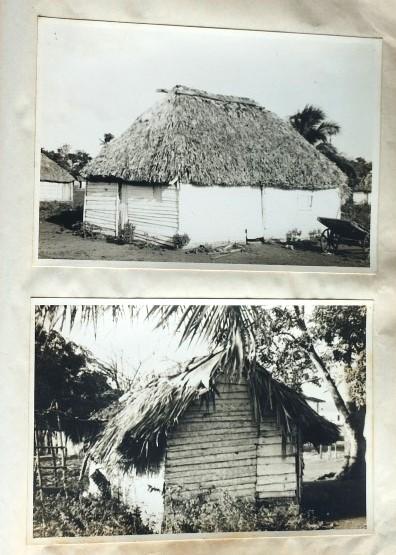
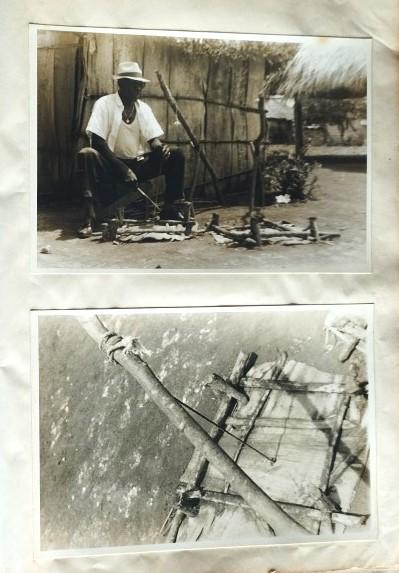
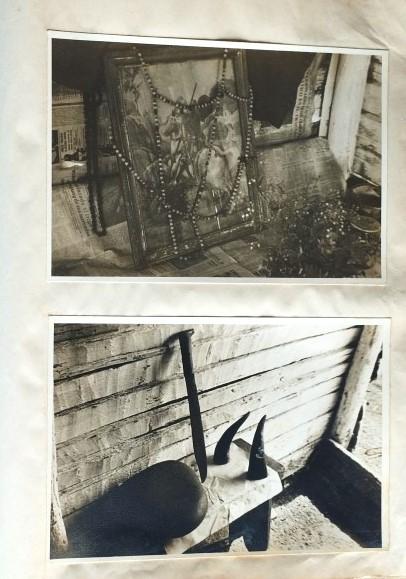
He recounts stories of 'sombís' and their presence in daily life and in the sugar plantations. The author includes descriptions of religious ceremonies. Some of these are second hand, but Pedro Díaz was present for Holy Week (mid April in 1962), an important period for followers of the Loá cult, is able to describe the ceremonies. He also offers a long and detailed account of the funeral of a cane cutter which occurred during his stay in the hamlet. Some parts of the 'Informe' were published in numbers 1 and 4 of the review Etnología y Folklore, published by the Cuban Academia de Ciencias in 1966 and 1967 respectively. The first number includes some 21 pages of the original text, with minor alterations, specifically the parts pertaining to the ethnological make up of the community of Guanamaca, followed by an account of how Haitian women were tricked into emigrating to Cuba, where they were forced into prostitution, and bought and sold by 'contratistas'. The fourth issue of the magazine includes an article headed 'La Semana Santa Haitiano-Cubana'; this contains about four pages largely taken from the Informe, but much of the article describes the ceremonies of Semana Santa in 1964, two years after the Informe was written. Of the 171 pages of the Informe, about 145 are unpublished, including Pedro Díaz's descriptions of the geography and social structures of Guanamaca, and, more importantly, the stories that were passed on, the cults and the greater part of the religious beliefs and practices. Likewise, only 2 of the 41 photos included in the Informe are included in the two published articles. These original photos show widely varied aspects of life in Guanamaca: hunting jutías (hutias) in the mangrove swamps, charcoal manufacture, knife grinding, the manufacture of yarey hats, the bohios and other buildings in the village, etc. But of greatest interest are the photos of 'carolinas' (in the published article the name is 'caolina') - we have been unable to find any other references to this simple stringed instrument; a Loa altar, an altar prepared for funeral rites, and other objects pertaining to the cult of Loa / voodoo.
The copy of the 'Informe' that we are offering for sale is Alberto Pedro Díaz's personal copy. The typescript is a carbon copy, and one would suppose that the original was held in the Academia de Ciencias. However, when a colleague in Havana enquired in person, no copy of the Informe could be found - indeed, there was no information whatsoever about Alberto Pedro Díaz in the institution, despite the four decades that he had dedicated to ethnographical investigations under their auspices.