

| Ciudad: | Lima |
| Año: | 1805. |
| Medidas: | 18.5x24. |
| Paginación: | Printed sheet, with details filled in by hand. |
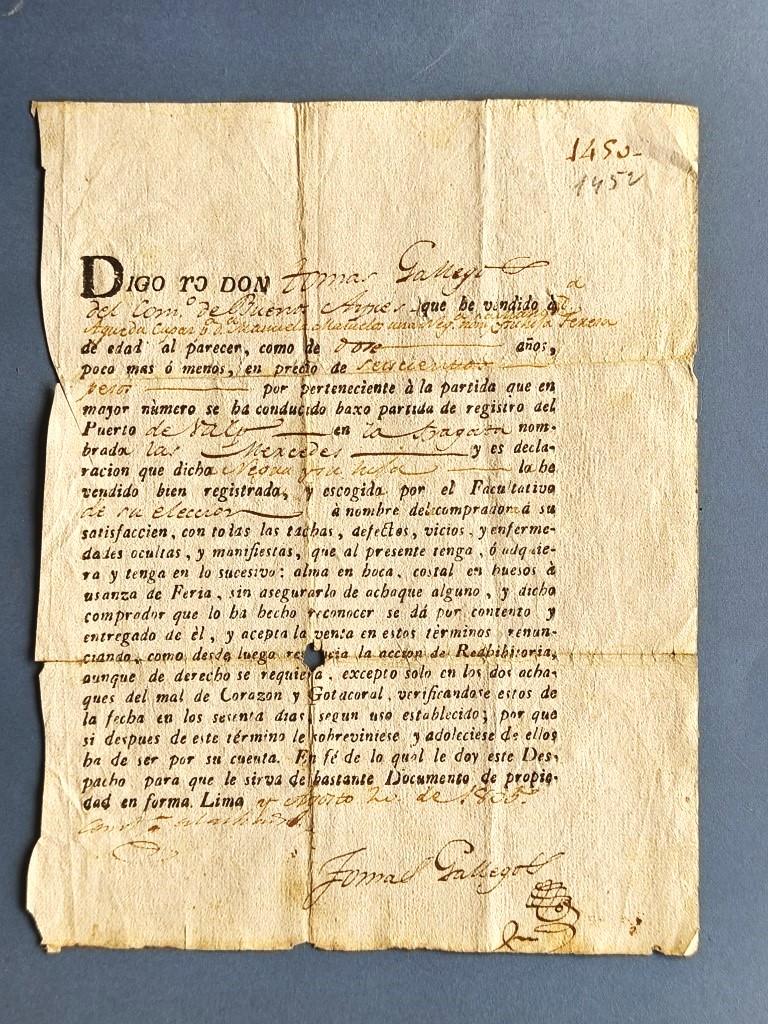
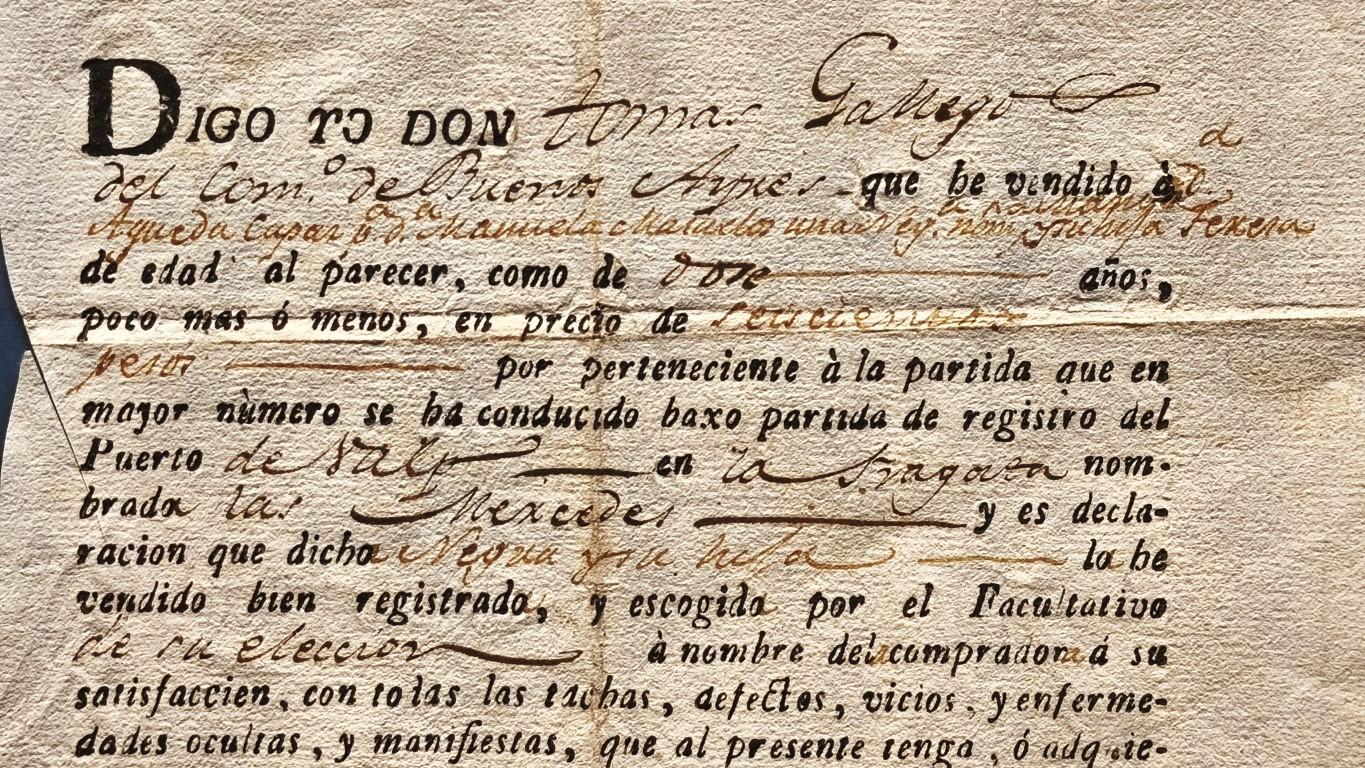
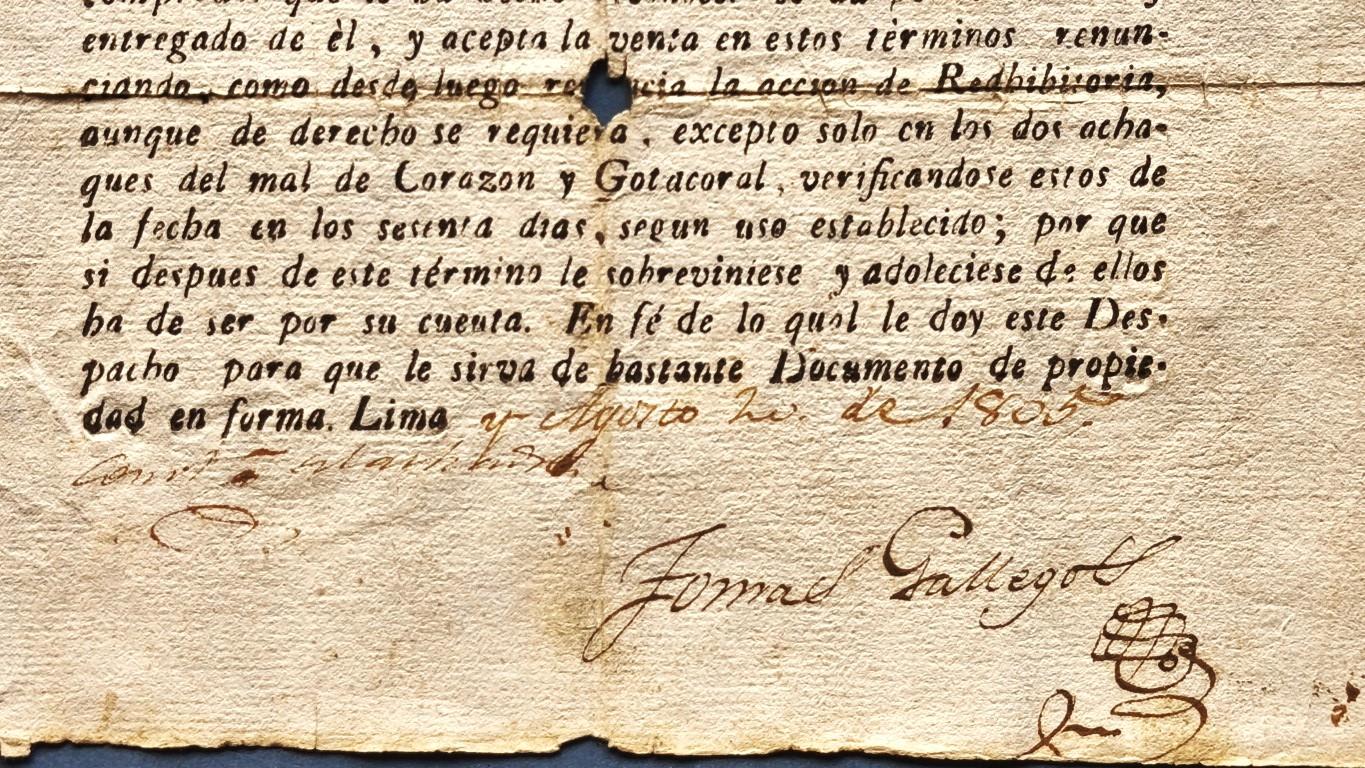
"Digo yo Don Tomás Gallego del Comercio de Buenos Ayres que he vendido a Dª Agueda Capaz y a Dª Manuela Mazuelos una Negra nombrada María y su hija Teresa de edad al parecer, como de doce años, poco más o menos, en el precio de seiscientos pesos por perteneciente a la partida que en mayor número se ha conducido baxo partida de registro del Puerto de Valp [Valparaiso, Chile] en la fragata nombrada Las Mercedes y es declaración que dicha Negra y su hija la he vendido bien registrada..." The second part of the contract uses formulaic terms typical of documents of this type: "...con todas las tachas, defectos, vicios, y enfermedades ocultas, y manifiestas, que al presente tenga, ó adquiera en lo sucesivo: alma en boca, costal en huesos a usanza de Feria, sin asegurarlo de achaque alguno, y dicho comprador que lo ha de reconocer se da por contento y entregado de él, y acepta la venta en estos términos..." We have not been able to discover the exact meaning of the expression " alma en boca, costal en huesos a usanza de Feria", which would sound rather quiant and picturesque if employed in some less terrible circumstance; however it appears to have been used exclusively for sale contracts for Africans newly enslaved and sold for the first time in Spanish America to state that they are in an apparent state of good health. The two purchasers were, it would seem, sisters in law, the maternal grandmother and great aunt of the Peruvian bishop Manuel Antonio Bandini Mazuelos. Agueda Capaz is accused in at least one contemporary document of ill treatment of a slave named Inés. Of the slave child María and her baby we have found no information, as is usually the case, but their life is likely to have been grim, given their general and particular circumstances. The price paid for the young mother and her child, 600 Pesos, was a high one, suggesting that she was considered to be of high value as a slave. The printed form has been filled in by two hands, suggesting that it was first written in with the general aspects of the human consignment - the name of the seller, the ship, its procedence, etc., and then latewr in a different (less readable) hand, with the particulars of this particular sale.